Blog 3
Circular Net-Positive Carbon Economies and Poverty Alleviation in South Asia.

Sep 26, 2025

Yagya

Climate Literacy
South Asia stands at a crossroads. On one hand lies persistent poverty, with millions still struggling to secure food, housing, and healthcare. On the other hand lies a rising contribution to global emissions, fueled by industrial expansion, energy demand, and rapid urbanization. Addressing one problem without the other will only deepen inequality and environmental degradation. The region’s path forward requires a new model of growth: one that combines circular economic principles with net-positive carbon design and places deprived communities at the center.
A circular economy is built on the principle of keeping resources in use for as long as possible, reducing waste, and minimizing the need for fresh raw materials. When designed to be net-positive, such systems go further by removing more carbon than they emit across their lifecycle. These concepts may often sound abstract, but in South Asia, they are already deeply ingrained in daily life. Waste pickers, repair workers, and small-scale recyclers operate within circular frameworks every day, though their work is informal, poorly compensated, and unsafe. Strengthening and formalizing these existing practices offers a direct way to create jobs, improve livelihoods, and reduce emissions at the same time.
The urgency is clear in the numbers. According to the World Bank, about 7.3 percent of the people in South Asia still live in extreme poverty in 2022, and millions more remain just above the poverty line, vulnerable to even minor shocks. Events like the 2022 Pakistan floods, which displaced millions and caused damages exceeding thirty billion dollars, show how quickly decades of poverty reduction can be reversed. At the same time, the region’s carbon footprint is rising. India alone contributed roughly 7.4 percent of global carbon dioxide emissions from fuel combustion in 2022, though per capita emissions remain far lower than in wealthier countries. The challenge is not just to lower emissions but to do so while protecting the poorest households from further hardship and cultivating an environment that uplifts these households from their vulnerability.
Circular systems offer precisely this bridge between climate, development, and social upliftment. The International Labour Organization estimates that the global shift to circular practices could create millions of new jobs in the Global South. In South Asia, this would include roles in repair services, recycling industries, sustainable textiles, eco-friendly construction, and community-level waste-to-resource enterprises. These jobs do not demand advanced education but instead build on skills many workers already possess, offering an accessible path out of informal labour and extreme poverty. More importantly, they provide families with stable incomes that can be invested in children’s education, breaking the cycle of poverty that often grips successive generations.
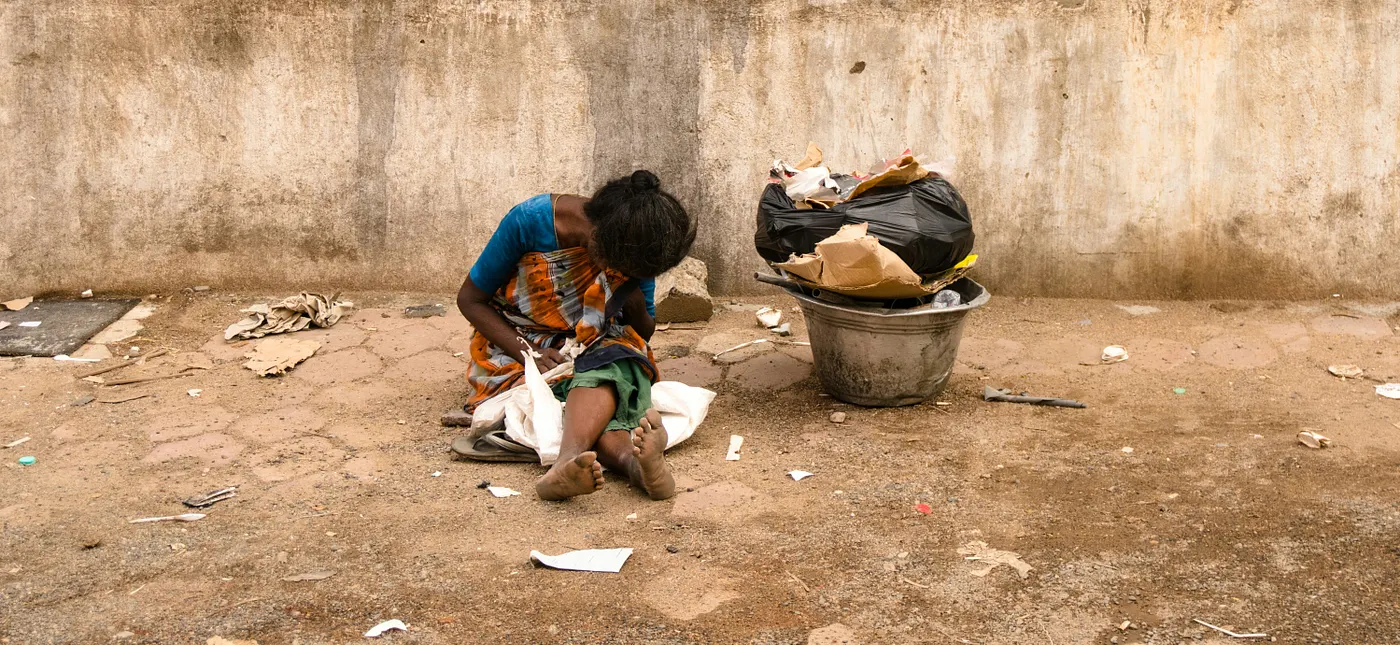
Waste workers illustrate both the potential and the transformative impact of circular systems. In cities such as Delhi, Dhaka, and Kathmandu, informal waste pickers recover huge amounts of plastic, metal, and paper that would otherwise end up in landfills or waterways. Their work already reduces emissions by lowering demand for new raw materials and limiting methane releases from dumpsites. Yet most earn below minimum wage, lack protective equipment, and face social stigma. Formalizing these workers into cooperatives ensures fair pay and provides health protections. This could raise incomes significantly while strengthening urban recycling rates and lowering municipal costs. The income stability created by such measures allows families to afford schooling, healthcare, and necessities, giving children a chance to escape the cycle of poverty.
India’s recent action against single-use plastics demonstrates both the challenges and opportunities of circular reform. In July 2022, the government banned 19 single-use plastic items, from cutlery to cigarette packets, to curb rising plastic waste. India generates about 3.4 million tonnes of plastic waste each year, and almost 40 percent of it remains uncollected. The ban has faced uneven enforcement, but it has also spurred innovation in biodegradable packaging and reusable alternatives. Small enterprises producing cloth, jute, and bagasse-based products are growing, creating new opportunities for local employment. These measures show how regulation, when combined with market incentives and community support, can shift value chains toward sustainability while creating stable livelihoods that enable families to invest in education and future opportunities for their children.
Beyond plastics, net positive carbon initiatives could transform rural livelihoods as well. Community-owned composting systems not only sequester carbon but also restore soil fertility for small farmers. Low-energy brick-making from industrial by-products could replace high-carbon clay kilns while creating local manufacturing jobs. Circular water reuse for irrigation can reduce both emissions and vulnerability to drought. Each of these interventions, if properly supported, provides households with a consistent income from inheriting the cycles of deprivation.
Policy support and financing are crucial to scale these ideas. Governments must craft programs that do three things at once: reduce emissions, expand decent work, and protect vulnerable households from disruption. Public procurement policies can guarantee demand for circular products, while targeted microfinance can help small entrepreneurs turn waste into resources. International climate funds and development banks should also prioritize small-scale circular enterprises. Especially those with explicit poverty-reduction and education-support goals. These are not charitable handouts but strategic investments in resiliency, as circular economies reduce import dependency, conserve resources, and strengthen local markets while giving families a pathway to secure their children’s future.
The vision is clear: a South Asia where low-income communities are not passive recipients of aid but active agents in climate solutions. Success would mean stable wages for the lowest strata of economic societies, healthier cities with lower landfill methane, rural economies strengthened by regenerative agriculture, and industries built on repair, reuse, and responsible production. It would also mean that children from vulnerable households attend school consistently, gaining the skills to thrive and break free from intergenerational poverty.
South Asia cannot afford to choose between fighting poverty and fighting climate change. Circular net positive carbon economies make it possible to do both at once, provided policies are designed to include those at the margins. By building climate solutions that start with the poor and their children, the region can create a future that is not only sustainable but also just.
Related Blogs

Share On